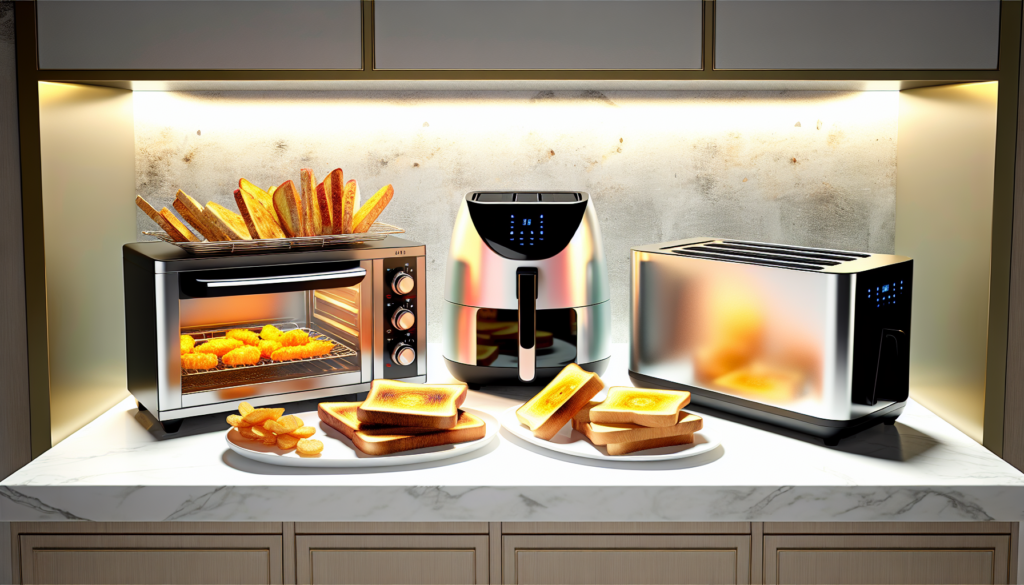
Today’s kitchens are filled with a vast selection of appliances promising better cooking results and healthier meals. Among the most popular are toaster oven air fryers, air fryers, air fryer ovens, and traditional toasters. This guide explores the differences, benefits, and tips for finding the best toaster oven or toaster for your needs, helping you make informed decisions for your countertop.
Understanding the Evolution of Kitchen Appliances
The journey of kitchen appliances dedicated to toasting, baking, and frying is a fascinating testament to technological innovation and evolving culinary preferences. In the early 20th century, a toasted slice of bread required either an open flame or a cumbersome and inefficient electric toaster. This device ingeniously combined the functions of a basic toaster with a compact oven, allowing for both direct radiant toasting and small-batch baking or broiling, giving home cooks newfound versatility.
Mid-century, the narrative took another turn with advancements like the 1945 Maxson Whirlwind Oven, the first to deploy forced-air convection heating for rapid, even cooking. While originally designed for commercial airliners, this technology laid the groundwork for today’s convection ovens, enhancing cooking efficiency and consistency by circulating hot air throughout the oven chamber. As families sought speed and better flavor in home-cooked meals, convection grew increasingly popular.
Fast forward to the 21st century, and the kitchen welcomed a game-changer: the air fryer. Philips debuted the first commercially available air fryer in 2006, harnessing the power of high-speed fans and a compact cooking chamber to mimic the results of deep frying with little to no oil. This breakthrough appealed to health-conscious consumers craving crisp, fried textures with fewer calories. Soon after, manufacturers began integrating air frying functions into toaster ovens, unleashing a new class of versatile appliances like the air fryer oven and the toaster oven air fryer combo.
How Do Toaster Ovens and Air Fryers Work
To fully grasp the distinctions between a toaster oven, an air fryer, and hybrid air fryer ovens, it’s essential to understand their underlying heating principles. Traditional toasters and toaster ovens primarily rely on *radiant heating*. In these appliances, metal coils become hot when electricity runs through them, emitting infrared radiation. This radiant heat penetrates the surface of bread or other foods, quickly raising their temperature to produce browning, crisping, and toasting effects. While effective for tasks like toasting and reheating, radiant heat can sometimes result in uneven cooking, especially if the air inside is not circulated.
Air fryers, and by extension air fryer ovens, operate on a different principle: *convection* enhanced by powerful fans. When you start an air fryer, heating elements warm the internal air, while a high-speed fan circulates this hot air rapidly around the food. This circulation disrupts the thermal boundary layer—a thin cushion of cooler air that naturally forms around food in static environments—which allows heat to transfer more efficiently and evenly. The high-speed air flow mimics deep frying by exposing the entire surface of the food to a continuous blast of heat, reducing cooking times and yielding a crisper texture with minimal oil.
Air fryer ovens merge the breadth of a toaster oven with the intense convection of a standalone air fryer, distributing hot air more uniformly even with larger or multiple items. This even distribution directly influences the Maillard reaction—the chemical process responsible for browning and flavor development—by ensuring that surfaces reach the right temperature for caramelization without overcooking the inside.
Pros and Cons of Air Fryer Ovens Versus Traditional Toaster Ovens
Air fryer ovens and traditional toaster ovens cater to similar needs but approach everyday cooking with different strengths and compromises. Air fryer ovens, equipped with high-speed fans and powerful heating elements, excel at producing crispy textures with minimal oil—perfect for preparing foods like chicken wings, fries, or breaded vegetables. Their rapid convection technology distributes heat evenly, yielding faster cooking times for air-fried foods compared to conventional toaster ovens, and they’re popular for creating healthier versions of deep-fried dishes.
However, air fryer ovens can have a steeper learning curve for great results with some recipes, and their basket or rack capacity can be limiting for batch cooking or baking larger items like cookies or pastries. Their strong airflow may also dry out delicate baked goods, so they’re not always the top pick for cakes or breads requiring gentle, even heat.
Traditional toaster ovens, in contrast, offer versatility in cooking methods such as baking, broiling, reheating, toasting, and even some roasting. Their design, typically more spacious and with adjustable racks, makes them ideal for toasting multiple bread slices, baking small casseroles, or reheating pizza without sacrificing texture. Toaster ovens usually require a bit more preheating time, but they shine for tasks that demand even, radiant heat rather than aggressive air circulation. They also often feature more precise temperature and timing controls than some air fryer ovens.
In terms of energy efficiency, both appliances generally use less energy than full-size ovens, but air fryer ovens, owing to their shorter cook times, can have a slight edge with simple fried foods. For those who bake, toast, and reheat regularly, a good toaster oven covers more ground. For those prioritizing healthier frying and crisp textures above all, air fryer ovens bring those perks home.
How to Choose the Best Toaster Oven or Toaster for Your Kitchen
Selecting the best toaster oven or toaster for your kitchen requires thoughtful consideration of your cooking habits, available space, and the features that matter most to you. Start by evaluating size and capacity. For small kitchens or for users primarily making toast, a compact two- or four-slice pop-up toaster is efficient and unobtrusive. On the other hand, if you frequently prepare meals or need to handle dishes beyond simple toast—think frozen pizzas, casseroles, or sheet-pan dinners—a larger toaster oven or air fryer oven with at least a 0.6 cubic foot capacity may be preferable.
Programmability and customizable features can greatly enhance convenience. Modern toaster ovens and air fryer ovens often come with digital controls that provide precise temperature and time settings, as well as pre-set functions for specific foods like bagels, pizza, or cookies.
Specialized functions deserve attention, too. If you relish perfectly toasted bagels, seek a toaster or oven with a one-sided toasting mode. For healthy eating, air fryer and air fryer oven options allow for “fried” favorites with minimal oil. Materials matter as well: stainless steel exteriors are durable and easy to clean, while non-stick interiors facilitate quick maintenance.
Ultimately, choose a compact pop-up toaster for straightforward, speedy toast in tight spaces. Opt for a multifunction toaster oven or air fryer oven if you enjoy variety—reheating leftovers, baking cakes, or air frying snacks. Think about your daily patterns: matching appliance size and features to your routine ensures your investment improves both meal quality and kitchen efficiency.
Maximizing Efficiency and Results With Modern Appliances
Getting the most value from your toaster oven, air fryer, or air fryer oven means embracing both their versatility and efficiency. For consistent results, always preheat your appliance unless the manual specifically advises otherwise. Yet, with convection or dedicated air fry modes, set your temperature 15-25°F lower than standard recipes recommend—these models circulate hot air for crispier, faster cooking without needing as much heat.
Select the right appliance for each food. Use the toaster oven for baked goods, open-faced sandwiches, and roasting vegetables, thanks to its consistent heat and even browning. Air fryers shine with smaller, quick-cooking foods: think fries, chicken wings, or reheating leftovers for a satisfying crunch with minimal oil. Air fryer ovens are ideal for larger batches or dehydrating foods.
For healthier meals, coat ingredients lightly in oil using a spray bottle; avoid heavy breading to reduce extra calories while achieving crispiness. When making toast, consider using whole-grain breads and thinner slices for even toasting and improved nutrition.
Proper cleaning and maintenance will boost efficiency and lifespan. Remove crumbs after each use to prevent burning. Wash removable trays and baskets regularly with warm soapy water. De-scale heating elements and avoid abrasive cleaners that can damage nonstick surfaces.
Energy optimization means matching batch size to appliance capacity: don’t run large units half full. Use the timer function to prevent overcooking (and wasted electricity). For most air fryers and toaster ovens, unplug when not in use to eliminate standby energy draw.
Safety remains paramount. Always allow appliances to cool before cleaning; keep cords clear of hot surfaces. Position units away from walls to ensure proper airflow, reducing fire risk. Never leave cooking food unattended.
When thoughtfully used, these appliances streamline meal prep, reduce energy bills, and accommodate both quick weekday breakfasts and showstopper desserts for holidays—making everyday cooking healthier, tastier, and more enjoyable.
Conclusions
Toaster ovens, air fryers, and traditional toasters each offer unique strengths for the modern kitchen. Understanding their differences helps you choose appliances that align with your lifestyle and cooking needs. By leveraging features like convection and air frying, you can prepare healthier, tastier meals more efficiently, ensuring your investment delivers both convenience and delicious results.
For similar reviews, visit mykitchenreview.com