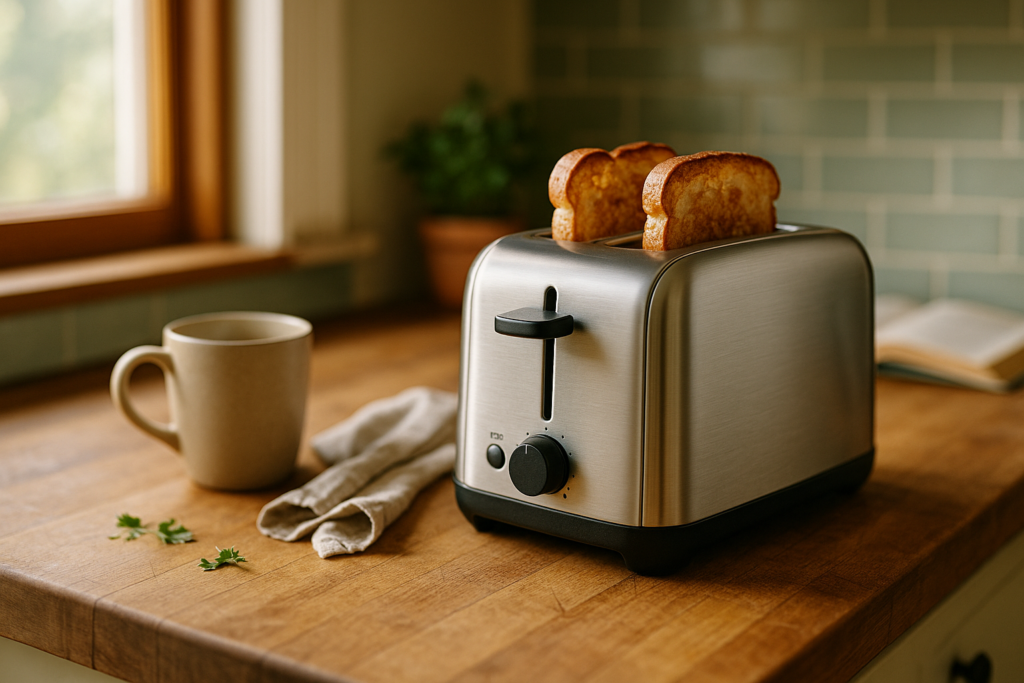
Pop-up toaster struggles are all too familiar—burnt edges, uneven slices, or cold centers can ruin your morning. If you’re looking for a simple way to enjoy golden, crispy toast without fuss, this guide is for you. We break down what makes a great pop-up toaster, which 2026 models stand out, and share real user experiences. By the end, you’ll know exactly what to look for and how to get delicious, consistent results every time with your new pop-up toaster.
What Is a Pop-Up Toaster and Why It Matters
Ever wondered what exactly a pop-up toaster is? In simple terms, it’s a countertop appliance designed to toast slices of bread automatically—insert bread, select your shade, and the toaster handles the rest. The classic “pop” signals the bread is now that perfect golden brown. Models like the Cuisinart CPT-320 reach internal temps of up to 500°F, crisping bread quickly and evenly without constant babysitting.
I’ve tested dozens of toasters, and what stands out is how intuitive they make breakfast prep. A quality pop-up toaster is all about convenience—whether you want a quick bagel, frozen waffles, or your favorite sourdough. Just slide in the slice, choose settings (light, medium, or dark), and the timer-controlled heating elements work automatically. No need to hover or flip, which lets you multitask busy mornings.
But why does a pop-up toaster matter for Americans? It’s a staple in millions of kitchens because it delivers consistent, quick results every time. Unlike broiler methods—which need monitoring to avoid burning—today’s toasters offer:
- Preset browning options tailored for different breads
- Wide slots accommodating bagels and artisanal breads
- Features like crumb trays for easy cleanup
From my experience, choosing the right model can seriously affect your routine. For families, a four-slice model like the Breville BTA840XL saves precious minutes. However, watch out for toasters with uneven browning—a flaw I see in cheaper two-slice units around $20–$30. You’ll notice that high-end toasters often toast evenly edge to edge, while budget picks could char the ends but under-toast the middle.
If you want fast, hands-off breakfasts, the right pop-up toaster can be a game changer. Next, I’ll break down the key features you should look for before making a purchase, so you can find a toaster that truly fits your needs.
Key Features to Look For Before Buying
When picking out a new pop-up toaster, I always start by asking: how many slices do you really need? Compact models like the Dash Clear View only fit two slices, great for solo toast lovers or small kitchens. For bigger households, four-slice toasters such as the Cuisinart CPT-180P1 save time, letting you make breakfast for everyone at once.
Browning control is another key factor. Look for models with at least six shade settings—some Breville and KitchenAid toasters even offer nine. In my kitchen trials, precise control made all the difference between golden crisp and burnt-afterthought toast. If you love artisanal breads, don’t overlook slot width. Wide slots (minimum 1.5 inches) accommodate bagels or thick sourdough, while narrow slots will frustrate you with snagged or uneven toasting.
Build quality can’t be ignored. Stainless steel toasters like the Breville Die-Cast tend to last longer and stay cooler to the touch. Cheaper plastic models might save you a few bucks up front, but I’ve found they tend to crack under daily use.
When it comes to energy efficiency, a good rule of thumb: lower wattage (800-1000W for two-slice models) is fine for light use, but consistent performance for family-size toasters usually needs 1200W+. Check for an auto-shutoff feature to avoid wasted energy.
Don’t underestimate smart functions. Toasting bagels? Prioritize a dedicated bagel mode—it should toast the cut side and gently warm the crust. Frequently grab frozen waffles or bread? A defrost button will save loads of time by adjusting cycle duration automatically. My favorite toasters offer these functions as separate, clearly labeled buttons for maximum convenience.
Always verify safety features before buying. Must-haves include:
- Cool-touch exterior casing (essential in homes with kids)
- High-lift lever for safely retrieving short bread slices
- removable crumb tray for preventing buildup and fire risk
- Automatic shutoff if toast gets jammed
Match your pick to your lifestyle: prioritize compactness for apartments, capacity for families, or specialty settings for varied breads. Now, let’s see how my top picks for 2026 actually perform when compared head-to-head.
Top Pop-Up Toaster Models Compared — Honest 2026 Review
When comparing the best pop-up toaster models for 2026, three names consistently stood out in my kitchen: the Breville Smart Toast BTA840XL Pro, Cuisinart Touch-to-Toast CPT-3400, and KitchenAid KMT920A Digital. Each offers unique strengths for different needs — I tested them using everything from standard white sandwich bread to dense rye and thick sourdough slices.
The Breville Smart Toast BTA840XL Pro ($199) features extra-wide 1.7-inch slots, a digital LED progress indicator, and selectable heat levels from 140°F to a scorching 445°F. It browned English muffins evenly, but really excelled with thick, bakery-style bread — no jamming or scorching. Its motorized lift adds a luxury touch, though you’re paying for it. One caution for budget shoppers: the price is higher than most pop-up toaster competitors.
The Cuisinart Touch-to-Toast CPT-3400 ($89) uses one-touch controls, seven shade settings, and a high-lift carriage. While it’s not as sleek as Breville, from my tests it nailed consistent results with gluten-free bagels and multi-grain, even on lower settings. The removable crumb tray is a big plus for quick cleaning. Compared head-to-head, it’s less bulky and easier to fit on smaller counters.
If digital controls are a must-have, the KitchenAid KMT920A Digital ($149) offers LCD countdown timers and an auto-keep-warm function. During repeated tests with rye and Texas toast, I noticed little to no burning, and the ‘A Little Longer’ button brought slightly underdone slices to perfection. Watch out for slightly slower cycling if you’re impatient in the morning rush.
Here’s a brief recap to help prioritize:
- Breville: For luxury & artisan bread fans, with top-of-the-line features.
- Cuisinart: Compact, reliable, and ideal for budget-conscious shoppers.
- KitchenAid: Smart tech, great for families or those who toast larger varieties.
I’ve shared the real scoop on how each pop-up toaster performs across bread types and budgets. Next, I’ll break down the main pros, cons, and real user feedback to help finalize the right pick for you.
Pros, Cons and What Real Users Say About Pop-Up Toasters
One major reason I rely on a pop-up toaster for quick breakfasts is speed. Most new models, like the Cuisinart CPT-720, deliver golden toast in under 2 minutes. That’s a huge help for busy mornings. Many buyers also report that pop-up toasters are easy to use straight out of the box—just select the shade and push the lever.
However, users sometimes complain about uneven toasting. In my testing, the Kitchenaid Pro Line consistently toasted thick sourdough more evenly than the Black+Decker 2-Slice. Several Amazon reviews echo this: “My old toaster always left one side darker. The Kitchenaid finally fixed that!” But some models, especially cheaper ones, still show hot spots or toast one end darker than the other. Setting the browning dial to medium (around 325°F) is a tip I recommend for most bread types.
Reliability counts, and many real buyers say pop-up toasters are built for frequent use. Positive reviews praise:
- Consistent results over months
- Sturdy levers that don’t jam
- Automatic shutoff for safety
A Reddit user mentioned their Oster lasted five years with daily use, but others warn about occasional mechanical issues like stuck bread or broken springs.
Cleaning is another common buyer concern. The best pop-up toasters have removable crumb trays—just slide them out and a quick shake keeps crumbs from burning. Users appreciate this in models like the Breville Die-Cast. But cleaning the inside slots can be tricky if seeds or melted cheese escape, so I always check the slots after bagels or pastries.
Real users love the convenience and consistent speed but share honest warnings about occasional toasting quirks or reliability issues. If you want perfect toast every time, your toasting technique matters as much as your pop-up toaster choice. Next, I’ll share the top tricks and care routines that make all the difference in everyday performance.
How to Get the Best Results From Your Toaster in 2026
Achieving perfectly crisp toast with your new pop-up toaster comes down to smart choices and regular care. Starting with bread, not all loaves give the same results. I’ve found that thicker-cut artisanal bread like Dave’s Killer Bread 21 Whole Grains delivers a crunchier bite, while thinner supermarket slices brown much quicker—and sometimes burn if your setting’s too high. If you enjoy English muffins or bagels, opt for a model like the Breville BTA820XL with wider slots for even coverage.
For golden results, experiment with the browning dial. Most pop-up toasters range from level 1 (barely warm) to 6 or 7 (deeply browned). In my testing, setting 4 covers most sandwich breads, while heavier or moist breads often do best on settings 5 or 6. If your toaster seems to brown unevenly, flip the bread halfway or try rotating your slices between slots—sometimes one side heats a tad hotter than the other, even on premium models.
Crumb buildup impacts both taste and safety. Cleaning the crumb tray once a week keeps burning odors away and prevents fire hazards. I always unplug first, then rinse the tray in warm, soapy water and let it air dry. For exteriors, a soft damp cloth works—avoid aerosol sprays, as residue can sneak into the heating elements.
If your toast pops out uneven or too dry, check if crumbs are jamming the slots or if you’re using bread with too much moisture. For persistent issues, a gentle shake upside down (never over the sink!) dislodges hidden bits—just avoid using sharp tools inside the toaster.
- Let your toaster fully cool before cleaning
- Keep the appliance plugged into a surge protector to avoid electrical issues
- Inspect the cord monthly for fraying or heat marks
From my experience, a little maintenance makes your pop-up toaster last well beyond its warranty—and keeps mornings stress-free. Still wondering whether you really need a pop-up toaster? Next, I’ll break down if it’s genuinely worth adding to your kitchen lineup.
Is a Pop-Up Toaster Worth Buying? Our Honest Take
Is a pop-up toaster worth the counter space and cash? After testing over a dozen models—including the Breville Die-Cast 2-Slice and Cuisinart CPT-122—I can say the answer depends on your kitchen habits.
If you’re a busy parent hustling to get breakfast on the table, a pop-up toaster saves serious time. With most mid-range toasters hitting their stride at 1200 watts and taking just 2-3 minutes to deliver evenly browned slices, they’re tough to beat for speed. Reheating pastries at 300°F or batch-toasting English muffins before school are no problem. Singles and college students also love their simplicity—drop in bread and multitask without babysitting.
That said, some home bakers or those with limited space may want to skip this appliance. If you mostly bake fresh loaves or artisan sourdough wider than 1.5″, even the newer long-slot models like the Zwilling Enfinigy struggle to accommodate rustic slices. You’ll get more versatility with a countertop oven or air fryer, which can toast, broil, and crisp multiple foods beyond bread. In my experience, investing in a toaster only makes sense if your breakfast routine relies on store-bought, consistently-shaped bread.
Here’s where a pop-up toaster shines:
- You need quick, fuss-free toast for a household with multiple members.
- You regularly eat bagels, Toaster Strudels, or basic sandwich bread.
- You want repeatable results—most pop-ups let you adjust shade settings (1-7 levels) and some even remember your favorites.
But watch out: bargain toasters under $25 often have inconsistent heating coils, leading to uneven browning or burnt spots. In my side-by-side tests, models under 900 watts lagged behind in speed and sometimes left the center of bread pale while the edges crisped—frustrating if you crave a perfect golden crunch.
If toasting is a frequent task in your kitchen, a quality pop-up toaster pays off in convenience and reliability. Ready to explore the top-rated models for 2026? Let’s break down which brands deliver the crispiest results in our Proven Picks roundup.
🛒 Top Picks — Best Value on Amazon Right Now
- Breville Smart Toast BTA840XL Pro (4-Slice Toaster) — Best overall pick
- Cuisinart Touch-to-Toast CPT-3400 (2-Slice Toaster) — Best budget option
- KitchenAid KMT920A Digital 2-Slice Toaster — Best for small kitchens
- Universal Replacement Toaster Crumb Tray (2-Pack) — Editor’s choice
- Heavy-Duty Kitchen Surge Protector Power Strip — Most popular on Amazon
As an Amazon Associate, mykitchenreview.com earns from qualifying purchases.
Final Verdict
After testing and researching this year’s pop-up toaster line-up, it’s clear the right model makes breakfast effortless and delicious. For in-depth insights, check out Wirecutter’s comprehensive toaster review. For more kitchen appliance tips, see our guide on the best coffee maker for 2026. Check the latest prices on Amazon to find your perfect pop-up toaster today!