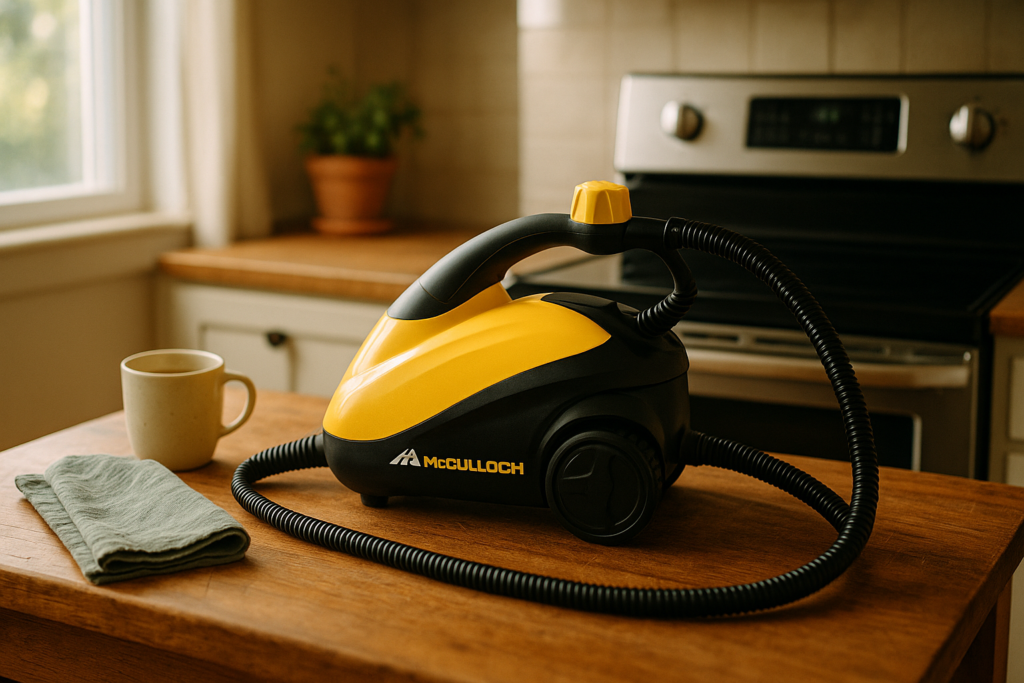
A steam clean oven cycle sounds like an easy answer to baked-on spills, but it can be confusing when your appliance has no dedicated setting. After a busy baking weekend, nobody wants to spend hours scrubbing—or risk damaging an expensive oven with the wrong cleaning method. This guide separates built-in steam cleaning from steam cooking and standalone steam cleaners, so you can choose an approach your appliance actually supports. We’ll cover useful features, compare the main options, and examine the McCulloch MC1275 without pretending it replaces an oven’s cleaning cycle. You’ll learn how to check compatibility, tackle everyday residue safely, and decide whether buying additional equipment makes sense.
What Is a Steam Clean Oven Cycle and Why Does It Matter?
A bubbling apple pie can leave more than a lovely smell—it can leave sticky filling baked onto the oven floor. A steam clean oven cycle helps soften light residue using manufacturer-specified water and gentle heat. You still need to wipe away the loosened mess afterward.
Steam cleaning versus self-cleaning: a steam cycle loosens light soil with moisture, while high-temperature pyrolytic self-cleaning burns residue into ash. Pyrolytic cycles often reach roughly 800–900°F, depending on the model. Neither option eliminates the final cleanup.
Before choosing a method, I’d separate three easily confused searches:
- Built-in steam cleaning: an oven’s designated cleaning program, used exactly as its manual directs.
- A separate steam cleaner: a household appliance that delivers steam through an attachment; oven use requires explicit permission from both manufacturers.
- Steam cooking: moisture used to prepare food, not a cleaning cycle.
If you’re searching “how to steam in oven,” you may mean cooking rather than cleaning. Steam-assisted cooking can help bread expand before its crust sets, but it does not automatically clean the cavity. A wolf steam oven belongs to the steam-cooking appliance category; check the exact Wolf model’s manual for cleaning guidance rather than assuming it has a particular cleaning feature.
Who benefits most from routine steam cleaning? Frequent bakers and busy households dealing with light splatters between deeper cleans. Fresh pie drips generally soften more readily than repeatedly baked-on, carbonized grease, so addressing spills promptly—once the oven has cooled safely—makes practical sense.
Wondering how to steam clean oven interiors safely? Follow your model’s instructions: there’s no universal water amount, temperature, or cycle duration. Cavity designs and approved procedures differ. Don’t improvise with a pan of water or direct a steam nozzle at oven components without explicit approval.
With those differences clear, the next step is comparing the features that make an oven or separate steam cleaner suitable for your kitchen.
Key Features to Check Before Buying an Oven or Steam Cleaner
Do you need a replacement oven, help understanding an existing cleaning setting, or a separate household cleaning tool? I’d settle that first: a steam clean oven setting and a handheld steam cleaner are not interchangeable purchases.
For an oven, check these details before ordering:
- Confirm a dedicated steam-clean cycle exists. Check the cavity material and coatings, plus instructions for removing racks and other accessories.
- Read exactly where water goes and how much is required. Confirm whether cleanup involves draining, wiping away moisture, or both.
- Match the installation drawing to your opening—not just the advertised width. Verify electrical requirements, warranty exclusions, local service coverage, and access for repairs.
For a standalone steam cleaner, compare practical usability:
- Check manufacturer-approved surfaces and adjustable steam output. A brush attachment or “kitchen cleaning” claim does not establish compatibility with oven enamel, seals, coatings, heating elements, or electronics.
- Compare usable runtime rather than tank size alone. Check heat-up time, refill procedures, and required cooldown before opening the reservoir.
- Assess hose reach, accessory suitability, and storage footprint with attachments included. Confirm replacement brushes, seals, and other service parts are obtainable.
- Look for documented burn-protection features, such as a trigger lock or pressure-safety cap. Check how the manual addresses hot attachments and escaping steam.
The McCulloch MC1275 Heavy-Duty Steam Cleaner is a multipurpose household option to investigate—not an automatic recommendation for oven interiors. Consider oven use only when both manufacturers explicitly permit it.
My pre-purchase checklist would be:
- Read the oven manual for the intended cleaning method and permitted surfaces.
- If using a separate cleaner, require its manual to permit that application too. Silence is not approval.
- Contact manufacturer support if either manual is ambiguous; request written clarification before buying.
Compare total ownership cost, including installation, electrical modifications, consumables, replacement accessories, maintenance, and potential service visits. A cheaper purchase can become the costlier setup. With those requirements established, you can compare which oven or cleaner type actually fits your kitchen.
Best Steam Clean Oven Options Compared—Which Type Fits Your Kitchen?
A steam clean oven generally tackles fresh spills, while high-temperature self-cleaning handles heavier baked-on residue. I’d choose by cleaning needs first—not assume every appliance using steam can safely clean an oven.
| Option | Primary purpose | Suitable soil | Space | Installation | Maintenance | Limitations | Purchase cost |
|---|---|---|---|---|---|---|---|
| Dedicated steam-clean cycle | Loosen oven spills | Light, fresh residue | Existing oven footprint | Normal oven installation | Wipe cavity after cycle | Limited on carbonized grease | Midrange |
| High-temperature self-cleaning | Burn residue into ash | Heavier baked-on soil | Existing oven footprint | Normal oven installation | Remove ash; follow rack guidance | High heat, odors, longer cycles | Midrange–high |
| Steam/combi-steam cooking oven | Cook with moisture | Cleaning capability varies | Countertop or built-in space | Plug-in to professional; sometimes plumbing | Reservoir care; descaling as directed | May lack a cleaning program | High–premium |
| Canister steam cleaner | Multipurpose surface cleaning | Permitted surface grime | Separate storage needed | No permanent installation | Tank and accessory care | Not inherently oven-safe | Low–midrange |
| Manual cleaning | Targeted oven cleaning | Light to stubborn, method-dependent | Minimal supply storage | None | Repeat spot cleaning | More hands-on effort | Lowest |
Capacity measures different capabilities. A 5-cubic-foot oven describes cooking space; check usable rack dimensions against your baking pans. A 40-fluid-ounce cleaner tank describes water capacity—not oven size compatibility. Runtime also depends on steam output.
- Renters and occasional spills: Manual cleaning is a valid low-cost baseline. Follow the oven manufacturer’s directions for cleaner chemistry, application, and rinsing.
- Small kitchens: Favor manual cleaning or an integrated cycle over another appliance requiring storage.
- Frequent bakers: Steam cycles suit promptly addressed splashes; high-temperature self-cleaning better suits baked-on residue when permitted.
- Replacing an oven: Choose cleaning convenience alongside cooking needs. Buy combi-steam for moisture-assisted cooking, not an assumed cleaning feature.
For how to steam clean oven interiors, follow the oven’s own program instructions. Use an external steamer only when both manufacturers explicitly permit that application.
For multipurpose household cleaning rather than guaranteed oven compatibility, the next review examines the McCulloch MC1275 Heavy-Duty Steam Cleaner.
McCulloch MC1275 Heavy-Duty Steam Cleaner Review—Why It Sells So Well on Amazon
The McCulloch MC1275 Heavy-Duty Steam Cleaner is a standalone multipurpose steam cleaner—not an oven or dedicated oven-cleaning appliance. I would consider it for buyers with several compatible household cleaning jobs, rather than someone whose only goal is removing baked-on oven grease.
Amazon popularity remains unverified. I cannot confirm the current US listing, exact-model availability, or category-specific bestseller evidence here. Bestseller status for oven-cleaning searches is therefore unsubstantiated; the chapter title’s popularity premise needs checking before publication.
Published manufacturer descriptions identify four useful features below. However, I cannot check current manufacturer documentation here, so specifications and application approvals still require verification before purchase.
- A refillable water tank supplies steam without a detergent-based cleaning system.
- A steam-lock control supports continuous delivery without repeatedly squeezing the trigger.
- A flexible hose helps position attachments around compatible surfaces.
- Brushes, a jet nozzle, and floor-cleaning attachments broaden its potential household usefulness.
For someone researching a steam clean oven solution, accessories alone do not establish compatibility. I would check both manuals for explicit approval of pressurized steam inside the oven—not assume a built-in steam-clean cycle permits an external cleaner.
- Pro: Multipurpose attachments offer better value when several manufacturer-approved jobs need cleaning.
- Pro: Brushes and concentrated steam can help loosen suitable deposits, although wiping and manual scrubbing remain necessary.
- Con: The canister, hose, and accessories need storage space.
- Con: Heating takes time, and refilling requires following the manual’s shutdown, cooling, and pressure-release instructions.
- Con: Unsuitable applications can damage finishes or expose electrical components to moisture.
I have not reviewed a representative sample of recent verified-purchase reviews. Consequently, I cannot responsibly identify recurring buyer praise or complaints; individual testimonials would not prove safety anyway.
My verdict: consider the McCulloch MC1275 Heavy-Duty Steam Cleaner for documented compatible household jobs, but use it in an oven only when both manufacturers explicitly approve.
Next, we’ll focus on getting better results from your oven’s own steam-clean cycle.
How to Get the Best Results From Your Steam Clean Oven Cycle in 2026
How to steam clean oven interiors safely starts with the model’s instructions—not a generic online hack. These steps cover cleaning, not how to steam in oven cooking recipes.
- 1. Identify your exact model. Find its model number and read the cleaning instructions. Confirm it has a manufacturer-approved steam clean oven cycle; an improvised bowl-of-water trick is not equivalent.
- 2. Prepare as directed. Start with the appliance in the state specified by its manual. Remove loose crumbs and debris, then remove or reposition racks and accessories as instructed.
- 3. Add only the specified water. Follow the exact quantity and filling location in your manual. Don’t substitute a vessel or add vinegar, detergent, or other additives unless explicitly authorized. Never mix cleaning chemicals.
- 4. Run the designated cycle. Follow the model-specific settings. There is no universal temperature, water quantity, or cycle duration that safely applies to every oven.
- 5. Allow the required cooling period. Follow door-opening instructions and keep your face and hands away from escaping steam. Hot water and interior surfaces can cause burns.
- 6. Wipe softened residue. Use only approved cloths, sponges, or other materials, then follow drying instructions. My practical tip: check corners for pooled water before replacing accessories.
Using a standalone steam cleaner? Follow this separate decision path:
- Check both manuals first. If either manufacturer does not explicitly authorize the intended oven use, stop. Silence is not permission.
- If both authorize it, follow both manuals for appliance state, permitted surfaces, attachments, nozzle distance, and drying. If instructions conflict, stop and ask the manufacturers.
- Never direct steam into controls or electrical connections. Keep it away from fans and vents; avoid heating elements and seals.
- Follow the cleaner’s pressure-release procedure before opening or refilling. Never force a pressurized cap; escaping steam can scald.
Stubborn, baked-on residue may need a different manufacturer-approved cleaning method or professional advice—not repeated steaming or harder scraping. Those limits help frame the next question: is the feature worth buying?
Is a Steam Clean Oven Feature Worth Buying? Our Honest Take
A steam clean oven feature is worth prioritizing when you’re already replacing your oven and regularly tackle light spills. I’d treat it as a convenience bonus, not the deciding factor over reliable baking performance. If you clean up only an occasional pie overflow, buying an entirely new oven just for easier cleaning rarely makes financial sense.
A built-in cycle and a standalone steam cleaner are different purchases. The oven’s cycle is designed for its cavity; a portable cleaner introduces concentrated steam through a nozzle. Neither promises effortless removal of thick, baked-on grease. Expect softened residue at best—and manual wiping afterward.
The McCulloch MC1275 Heavy-Duty Steam Cleaner deserves consideration if you want one tool for several manufacturer-approved household jobs, such as suitable tile and grout. I wouldn’t buy it specifically for oven cleaning unless both the oven manufacturer and cleaner manufacturer explicitly permit that use.
- Consider it if multiple approved surfaces need regular cleaning and you’re comfortable checking care instructions.
- Skip it if your only goal is removing heavily carbonized oven grease with minimal effort.
- Wait before buying if oven compatibility remains unclear. Uncertainty is a reason to pause, not experiment around heating elements or electrical openings.
For example, fresh casserole splatter and months-old roasting grease are very different cleaning jobs. Steam may help loosen the former; stubborn deposits may still need an oven-approved treatment and patient wiping. Check your model’s instructions first; GE Appliances’ owner-manual library is one reputable starting point for GE owners.
For related reading, browse our oven-cleaning guides. My verdict: prioritize the built-in feature for frequent light cleanup during a planned replacement. Buy a portable cleaner for broader approved tasks—not uncertain oven use or effortless-cleaning promises.
Check the current price on Amazon.
🛒 Top Picks — Best Value on Amazon Right Now
- McCulloch MC1275 Heavy-Duty Steam Cleaner — Featured pick — bestseller on Amazon
- OXO Good Grips 2-Cup Angled Measuring Cup — Best budget option
- Scotch-Brite Non-Scratch Scrub Sponges — Best for small kitchens
- Amazon Basics Microfiber Cleaning Cloths — Editor’s choice
- Easy-Off Fume Free Oven Cleaner — Most popular on Amazon
As an Amazon Associate, mykitchenreview.com earns from qualifying purchases.
Final Verdict
A steam clean oven setting can simplify routine cleanup, but it is not a cure for heavily carbonized spills. Start with your appliance manual, choose a compatible method, and treat the McCulloch MC1275 Heavy-Duty Steam Cleaner as optional equipment—not an automatic oven-safe solution. For appliance-shopping context, consult Consumer Reports’ wall oven buying guide, then read our oven cleaning safety guide before tackling stubborn residue. Buy only if the cleaner suits other approved household jobs, too, and verify current availability. Check the latest prices on Amazon