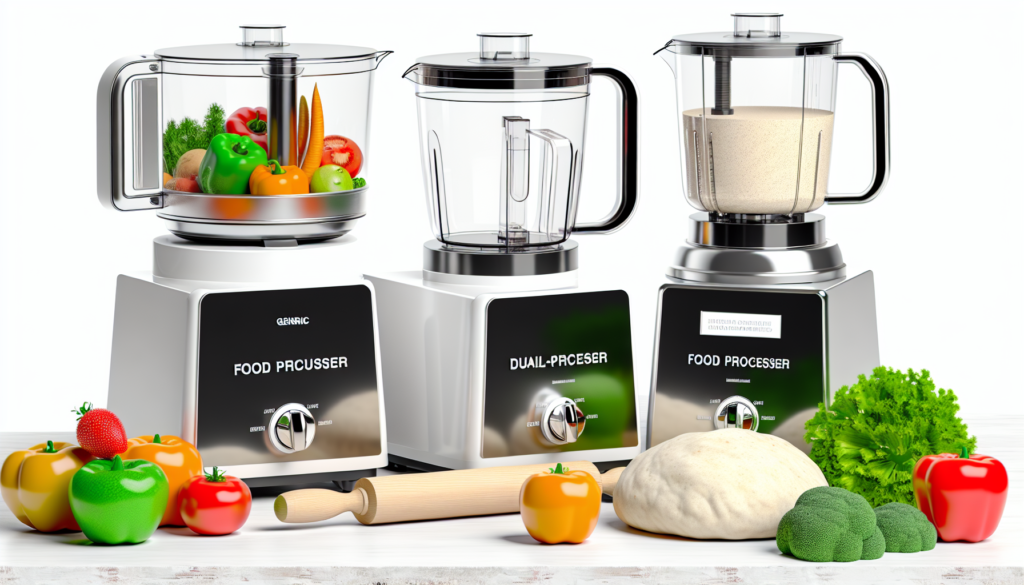
Food processors and blenders have revolutionized home cooking, making meal preparation quicker and easier. With leading brands like Cuisinart, Ninja, and KitchenAid offering a variety of models, choosing the right appliance can be daunting. This article explores the differences, strengths, and best uses for each brand and model, guiding you toward the best choice for your kitchen.
Understanding Food Processors and Blenders
Food processors and blenders, though seemingly similar, fulfill different culinary roles thanks to their distinct mechanical functions. Food processors are designed with versatility in mind, offering interchangeable blades and discs that can rapidly chop, slice, dice, grate, and even knead dough. Unlike blenders, food processors don’t require much—if any—liquid to operate. Their wide, flat bowls enable efficient processing of solid and semi-solid foods, making them indispensable for preparing salsas, pie crusts, shredded cheese, and more. The introduction of food processors to American kitchens, particularly starting with Cuisinart in the 1970s, marked a significant advancement in food prep. Models from familiar brands like KitchenAid or Ninja emphasize broad functionality and powerful motors capable of tackling tough jobs such as nut butters or kneading bread.
Blenders, in contrast, excel at tasks requiring liquid movement to circulate ingredients around their sharp, fixed blades. They are perfect for smoothies, soups, sauces, and purees because their tall, narrow jars actively draw fluids down toward the blade for thorough blending. Most blenders must have enough liquid in the mix; otherwise, the blades may spin without effectively processing the contents. Ninja, known for its powerful blenders, designs machines that easily pulverize ice or fibrous fruits, setting them apart when smoothie or frozen drink preparation is a priority.
Historically, the arrival of food processors (notably Cuisinart’s original introduction) revolutionized home cooking by offering much of the power and flexibility previously limited to commercial kitchens. Blenders, meanwhile, have roots reaching back to the early 20th century, becoming household staples for everything from milkshakes to soups. Modern kitchens frequently feature both a food processor and a blender, since their specialized capabilities together support a wide range of cooking and baking tasks. This synergy allows brands like Cuisinart, KitchenAid, and Ninja to cater to evolving culinary needs with innovative designs and multi-functional appliances.
Spotlight on Cuisinart: Innovation and Impact
Cuisinart’s journey from niche innovation to household name is deeply entwined with the evolution of food processors in America. Founded in 1971 by Carl Sontheimer, Cuisinart was inspired by the robust food preparation devices he observed in French kitchens. Recognizing the potential to revolutionize American cooking habits, Sontheimer adapted this concept for the American market, resulting in the debut of the Cuisinart Food Processor at a Boston trade show in 1973. Unlike existing kitchen appliances, the food processor Cuisinart introduced offered versatility well beyond simple chopping—quickly becoming an irreplaceable tool for slicing, shredding, pureeing, and kneading.
What distinguished Cuisinart early on was not just its robust motor and durability, but its thoughtful approach to design and usability. The company consistently upgraded its models to feature intuitive control panels and safety interlocks, making them accessible for users with a range of abilities. This focus on universal usability broadened its appeal, allowing more home cooks to experiment with complex food preparation that had previously been reserved for professionals.
Strategically, Cuisinart leveraged high-profile endorsements from culinary icons such as Julia Child and James Beard, who frequently showcased these processors in their cooking shows and books. Their trust in the brand helped solidify Cuisinart’s image as a must-have kitchen appliance. As rival brands like Ninja and KitchenAid entered the scene, Cuisinart maintained its edge by refining blade technology, offering a variety of attachments, and ensuring the food processor remained central to its lineup, while stepping into the blender food processor market as well.
Durability, reliability, and a consistent track record of innovation have kept Cuisinart at the forefront. Their products, from the classic food processor to multifunctional blenders, embody the spirit of accessibility and culinary empowerment, ensuring their enduring legacy even as competitor brands expand their offerings.
The Rise of Ninja and KitchenAid in Kitchen Appliances
Ninja and KitchenAid have become powerhouses in the modern kitchen, each offering distinct approaches to blenders and food processors that cater to a wide spectrum of home cooks. Ninja’s rapid ascent comes from a focus on versatility and innovation, blending the lines between food processors and blenders. Many Ninja appliances, such as their popular combined blender food processor systems, allow users to switch from crushing ice for smoothies to finely chopping vegetables for salsas without swapping machines. This all-in-one design especially attracts those with limited kitchen space or who value multi-functionality above all. Ninja’s offerings often integrate advanced technologies—like Total Crushing Blades and smart programmed settings—prioritizing convenience and speed without sacrificing performance.
KitchenAid, meanwhile, relies on a foundation of design excellence and heritage, drawing from its iconic stand mixer pedigree. Its food processors and blenders are lauded for their robust build quality, streamlined controls, and reliability, making them coveted fixtures on kitchen counters. KitchenAid focuses on a more modular system, with appliances tailored for specific food prep tasks but often offering a variety of optional accessories. Their bright color palette and timeless aesthetics appeal to those who see kitchen appliances as both tools and statement pieces.
Ninja’s user-centric, innovative features appeal most to those who value adaptability and practical multitasking, while KitchenAid attracts users invested in long-term dependability and stylish kitchen environments. Technological advancements also differ: Ninja tends to lead in smart, intuitive pre-sets and cutting-edge blade designs, whereas KitchenAid invests in steady motor performance and sturdy construction. Each brand’s product portfolio is now extensive, from compact mini-processors to high-performance blenders, underscoring how both brands have reshaped the conversation around efficient, creative food preparation.
How to Choose the Best Food Processor or Blender for You
Choosing the best food processor or blender hinges largely on your unique kitchen habits, so begin by pinpointing your primary needs. For avid bakers, a food processor with a robust dough blade, such as the Cuisinart 14-Cup Food Processor, navigates pastry, bread, and cookie dough with ease. If whipping up green smoothies and nut butters is your priority, a high-powered blender—like the Ninja Professional Blender—delivers smooth results even with tough ingredients. KitchenAid’s food processors and blenders, known for their iconic styling and durable construction, excel at meal prep tasks thanks to precise slicing and dicing discs.
Consider power and motor strength: heavy tasks (nut butters, dense bread dough) demand motors of at least 600 watts. Cuisinart’s processors offer 720–1,000 watts; Ninja’s combined blender-food processor models also feature strong motors ideal for multipurpose kitchens. If you’re space-constrained or prepping mostly for one or two, a compact option, like the KitchenAid 7-Cup Food Processor or Ninja Food Chopper, delivers efficiency without monopolizing your countertop.
Attachments matter—Cuisinart and KitchenAid offer an extensive suite of discs and blades for myriad tasks (julienning, shredding, spiralizing). Ninja innovates with interchangeable bases compatible with both blender pitchers and food processor bowls, maximizing versatility for the investment. Ease of cleaning is another key: dishwasher-safe parts and intuitive assembly/disassembly can be a game-changer during busy meal preps.
Brand reputation is also central. Cuisinart’s legacy in food processors earns trust for consistent performance, while KitchenAid’s warranty and after-sales support are industry benchmarks. Ninja’s affordability and multitasking prowess make it a favorite for families seeking value.
Compare models by making a checklist: power, bowl or carafe size, included accessories, cleaning method, and space requirements. Reading user reviews tailored to your main prep tasks is invaluable. Match appliance capacity to typical meal volume, and don’t overlook storage considerations—both for the appliance and its attachments—when choosing your ideal kitchen companion.
Making Your Decision: Top Picks and Final Recommendations
In evaluating the best options among Cuisinart, Ninja, and KitchenAid, several models consistently rise to the top for their distinctive strengths. For food processors, the Cuisinart 14-Cup Food Processor is widely regarded as the best overall. It’s equipped with a powerful motor, a generous capacity, and a thoughtful array of attachments, making it an ideal choice for serious meal preppers and bakers who need precision and reliability. For those seeking value, the Ninja Professional Plus Food Processor stands out. With intuitive controls, a strong blending function, and a compact design, Ninja offers great performance without a steep price tag. In the blender category, the KitchenAid K400 Blender distinguishes itself by combining robust power with fine-tuned speed settings, catering perfectly to smoothie enthusiasts and cooks who value versatility.
- Cuisinart:
- Pros: Consistently superior performance, wide variety of attachments, sturdy build.
- Cons: Higher price point, larger footprint can be challenging in smaller kitchens.
- Ninja:
- Pros: Excellent value, space-saving designs, highly rated combination blender/food processors.
- Cons: Attachments can be more basic, may not handle heavy-duty dough or prolonged use as easily.
- KitchenAid:
- Pros: Stylish designs, user-friendly controls, powerful blending and food processing options.
- Cons: Some models have smaller capacities, certain attachments sold separately.
Choosing between these top picks should be guided by your personal kitchen workflow. If you batch-cook or bake regularly, Cuisinart’s capacity and power pay off. If you prioritize countertop space and a balance of blending and processing, Ninja’s combo models shine. For those who value appearances along with function—especially for smoothies or sauces—KitchenAid is an appealing choice. Assess how often you cook, the complexity of your recipes, and which functions you’ll use most to ensure your investment enhances your everyday kitchen experience.
Conclusions
Choosing a food processor or blender depends on your cooking style, priorities, and kitchen space. Cuisinart leads in food processors, Ninja excels in versatility, and KitchenAid offers timeless design and enduring reliability. By comparing functions, features, and your specific needs, you can confidently select the perfect appliance to transform your meal preparation experience.
For more similar reviews, visit mykitchenreview.com