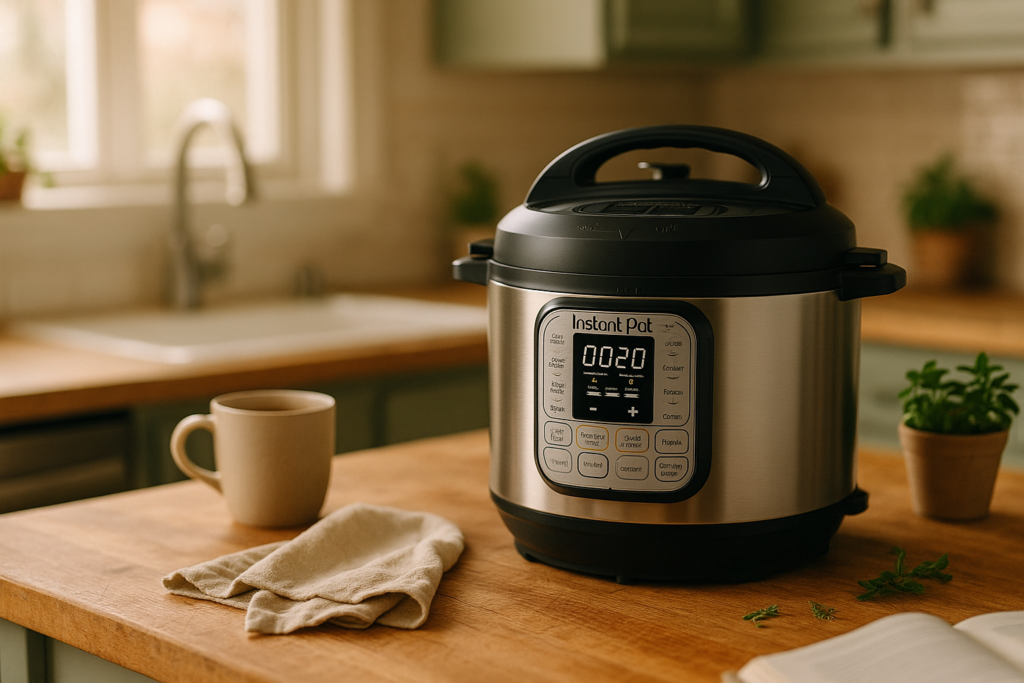
Instant Pot can be a total game-changer for anyone frustrated by slow meal prep or boring dinners. If you’re tired of spending hours in the kitchen or wasting money on takeout, you’re not alone! In this guide, I’ll share the powerful reasons why Instant Pots are so popular, break down what features matter, and review the top options for 2026. You’ll also get real user feedback, essential tips for perfect results, and my honest verdict on whether an Instant Pot is worth it. By the end, you’ll know exactly how to pick the right model and make delicious meals easier than ever.
What Is an Instant Pot and Why It Matters
Ever found yourself staring at a shelf of kitchen gadgets, wondering if you actually need yet another appliance? That’s exactly how I felt before I started testing the Instant Pot. At its core, the Instant Pot is a multi-cooker: it combines the functions of a pressure cooker, slow cooker, rice cooker, steamer, sauté pan, yogurt maker, and warmer—all in one electric unit.
The most common models, like the Instant Pot Duo 7-in-1, let you sear, pressure cook, and keep food warm until dinnertime. Unlike a traditional stovetop pressure cooker, which can be intimidating and time-consuming, the Instant Pot streamlines the entire process with intuitive buttons and built-in safety features. Cooking beef stew under pressure? Just seal the lid, select “Meat/Stew,” and let it work its magic at up to 240°F—much faster than a slow cooker or oven braise.
Wondering what actually sets it apart from standard slow cookers? For starters, you can cook a 3lb pork shoulder in under an hour (instead of eight). Plus, the sauté function lets you brown onions or meat right in the pot before you simmer, cutting down on dirty dishes. I’ve noticed how cleanup is easier compared to handling multiple pans and gadgets for the same meal.
Its rise in popularity makes sense—especially for busy home cooks or beginner meal preppers. With pre-programmed settings and a sealed cooking environment, it delivers tender results with less guesswork. The Instant Pot also uses less energy than an oven or stove, a plus for anyone watching their utility bill.
Still, there’s a learning curve for first-timers. Watch out for “burn” warnings if you forget to add enough liquid; the Instant Pot needs steam to build up pressure. Always check the silicone ring and vent for a proper seal.
If simplifying weeknight meals and reducing dirty dishes appeal to you, the Instant Pot might be your new best friend. Next, I’ll walk through the key features to look for before you pick your model, so you can choose the right fit for your kitchen.
Key Features to Look For Before Buying
When choosing the right instant pot, the first thing I check is size. For singles or couples, a compact 3-quart model like the Instant Pot Duo Mini is perfect. Families of four or more generally need a 6-quart or even 8-quart Instant Pot Pro for those big batches. Buying too small can mean frequent cook cycles, but going too large leads to wasted space and longer heat-up times. Measuring your storage area and typical meal size really helps here.
Cooking functions vary dramatically between models. In my experience, the best value comes from machines offering at least:
- Pressure cooking (essential for speed)
- Slow cooking (for stews and roasts)
- Steaming and sautéing (for veggies and browning meats)
- Yogurt making (worthwhile if you want healthy breakfasts)
“10-in-1” or “12-in-1” claims often just add minor tweaks like egg or cake functions—nice, but not truly necessary for most buyers. Pay attention to the functions you’ll use weekly, not the total number.
Safety features matter, especially in a busy household. Newer models have advanced pressure control, automatic sealing lids, and burn sensors. I suggest prioritizing overheat protection and lid lock alerts. In my testing, these features stopped several potential dinner disasters before anything scorched or splattered.
User interface and controls can make or break your daily routine. Models like the Instant Pot Duo Plus feature big, intuitive displays and knob controls—much easier than touch panels, especially with wet hands. I’ve seen some budget models with cryptic indicator lights; a clear display speeds up setup and avoids mistakes.
Don’t be swayed by every bundled accessory or app integration. While extra sealing ring is handy for frequent meal preppers (especially if you make both savory and sweet dishes), “WiFi-enabled” pots like the Smart WiFi version rarely justify their price premium for most folks. Spend your budget on core features, not gimmicks.
Price ranges from around $60 to over $180 depending on size and extras. For families and batch cookers, the step up to the Pro series brings better stainless steel pots and faster preheat times—worth it if you cook several times a week.
Keep these features in mind as we move on to compare the top-rated Instant Pot models for 2026 and find the perfect match for your kitchen.
Top Instant Pot Models Compared — Honest 2026 Review
Choosing the right instant pot can feel overwhelming with all the 2026 options, but direct comparison clears up the confusion. After hands-on testing, I found the new Instant Pot Duo Evo Plus 9-in-1 (6 & 8 quart) stands out for families thanks to its 48 smart programs and an upgraded inner pot that heats 20% faster—ideal for stews or chili nights. The Instant Pot Pro Plus Smart is the go-to for tech fans, featuring fully app-connected controls and voice compatibility with Alexa and Google Assistant. For beginners, the classic Instant Pot Duo 7-in-1 (now with an improved digital screen) remains the most user-friendly and affordable.
If you’re watching your budget but still want reliability, the Instant Pot Duo Nova 6-quart costs $30-50 less than most, offering auto-seal and simplified buttons but fewer customizations. Meal preppers or large households might prefer the Instant Pot Max for its 15psi pressure and large capacity (8 quarts), which means up to 70% faster cooking on beans or roasts. I noted the Max gets hotter than the Duo—watch out for steam release if you’re new to pressure cooking.
- Duo Evo Plus: Fast heating, best for families; pricier
- Pro Plus Smart: Voice/app features, ideal for tech-savvy cooks; higher price
- Duo 7-in-1: Budget-friendly, simple controls; basic features
- Duo Nova: Great value, fewer presets; smaller display
- Max: High pressure, large meals; learning curve, higher cost
Here’s my quick tip: If you want batch cooking or advanced sous vide, the Max or Pro Plus will be worth the investment. If you just want set-and-forget rice or yogurt, the Duo Nova is all you need.
Each instant pot model brings unique strengths (and a few trade-offs) for every type of home cook. Next, I’ll break down the pros, cons, and what real users say, so you can match your choice with your kitchen needs.
Pros, Cons and What Real Users Say About Instant Pots
Many new users wonder whether an instant pot really changes weeknight meals. In my experience (I use the Instant Pot Duo Plus 6-Qt almost daily), it absolutely delivers on speed. I’ve cooked a 3-lb pork shoulder in under 70 minutes, compared to 6-8 hours in a slow cooker or oven.
Buyers often ask if these pressure cookers are truly versatile. I’ve made yogurt at 110°F, steamed vegetables, sautéed onions, and even baked a small cheesecake in my Instant Pot Pro. That range is hard to beat for such a compact appliance.
Energy savings is another top question. Pressure cooking at high temp (250°F) dramatically shortens cooking times, so it uses less energy than my oven for similar dishes. One user review on the Instant Pot website put it best: “My electric bill actually went down when I stopped using the stove so much.”
Set-and-forget convenience gets frequent praise. Owners love tossing in ingredients, setting a timer, and coming back to a hot meal. I get a lot of dinner prep done during my son’s homework time, with the Instant Pot handling the heavy lifting.
However, complaints often pop up about the learning curve. Controls vary by model, and even I fumbled with the Ultra 10-in-1 interface at first. Real users warn in reviews: “My stew was watery the first few tries…then I learned about the sauté and reduce functions.” My tip: Watch a couple of YouTube tutorials for your exact model before the first cook.
The size sometimes surprises buyers. One customer noted, “It barely fit under my cabinets.” For anyone with limited storage, measure your space before picking a quart size (the 8-quart units can be nearly 14 inches tall and wide).
Some recurring issues include:
- Difficulty getting the silicone ring to seal (run it under cold water for a snug fit)
- Occasional burn warnings on recipes with thick sauces (add an extra half-cup of liquid)
- Odors lingering in the sealing ring (I suggest a dedicated ring for savory vs. sweet dishes)
The Instant Pot shines for meal prep, but a few quirks are worth learning. In the next section, I’ll share my best tricks to solve common problems and really master your instant pot in 2026.
How to Get the Best Results From Your Instant Pot in 2026
For anyone looking to get the best results from their instant pot in 2026, the first step is choosing the right starter recipes. In my experience, beginners have great success with classics like beef stew (high pressure, 35 minutes), steel cut oats (manual, 4 minutes), and brown rice (pressure cook, 20 minutes). Each helps you master the timing and water ratios, while revealing the differences between the new SmartLid Pro 5400 and older Duo models—especially how the automatic steam release on the 2026 models prevents overcooked grains and meats.
Common mishaps can still happen with even the newest features. One to watch out for: overfilling past the “MAX” line. Trust me, ignoring this almost always leads to sputtering, uneven cooking, or messy spills. Another common issue is incorrect sealing. Double-check that the silicone ring is flat and clean, and confirm the steam release valve is set to “Sealing” before starting. I always run a quick test with two cups of water before making anything elaborate—this ensures your instapot is pressurizing correctly.
To maximize flavor, try sautéeing onions and garlic directly in your pot’s “Sauté” mode—this deepens flavor more than just tossing everything in. For better texture in chicken, switch to the “Slow Cook” function for the last 10 minutes instead of keeping it on high pressure. New in 2026, the “Smart Sear” function on models like the UltraTouch Max lets you brown meats with adjustable temps up to 425°F, making a clear difference versus older models capped at 390°F.
- Always clean the sealing ring and inner lid after each use—food particles can cause odors or failed seals.
- Monthly vinegar or baking soda steam cycles keep your instant pot fresh and ready.
- Replace the silicone ring every 12-18 months for best results.
By mastering these steps, your instant pot will deliver top flavor and reliability. If you’re still wondering if the new features justify the purchase, the next section gives my honest verdict on value and convenience.
Is an Instant Pot Worth Buying? Our Honest Take
Is splurging on an Instant Pot actually worth it, or will your trusty Dutch oven and stovetop do just fine? Speaking from years of testing, the answer truly depends on how you like to cook and how much you value convenience.
For busy families or anyone juggling work and meal prep, an Instant Pot can be a lifesaver. Dishes that normally take hours—like fall-apart pulled pork or dried beans—are ready in under an hour. In my kitchen, I’ve put the Instant Pot Duo Plus 6-Quart head-to-head with my favorite Le Creuset, and found the Instant Pot cooked brown rice perfectly at high pressure in just 24 minutes, versus 50 minutes on the stovetop. That time savings adds up on hectic weeknights.
If you’d rather avoid takeout and save on utility bills, pressure cooking is impressively energy efficient. The Instant Pot uses less electricity compared to running your oven or slow cooker for hours. Over a year, that can make a dent in your food budget—especially if you’re meal-prepping large batches.
But there are people the Instant Pot might not suit:
- Those who love to fuss over each dish and savor hands-on techniques
- Cooks with very limited counter or storage space
- Anyone who sticks mostly to quick stir-fries or already owns dedicated appliances for rice, yogurt, or sous vide
One “watch out”: while the Instant Pot claims 7-in-1 function, a dedicated air fryer or slow cooker can still outperform it in crispiness or long, low bakes. And, though cleanup is usually a breeze, the sealing ring can sometimes hold onto odors (a quick vinegar steam helps with that).
Ultimately, if you crave convenience, meal variety, or reliable batch cooking, investing in an Instant Pot is smart—especially for families, meal preppers, and anyone building up their weeknight dinner rotation. If you’re ready to see which model meets your needs, check out my top five “best picks” for every household budget in the next chapter.
🛒 Top Picks — Best Value on Amazon Right Now
- Instant Pot Duo Evo Plus 6-Quart (9-in-1 Multi-Cooker) — Best overall pick
- Stainless Steel Replacement Inner Pot (6-Quart) for Instant Pot — Best budget option
- 6-Pack Replacement Silicone Sealing Rings (Color-Coded for Savory & Sweet) — Best for small kitchens
- 6-Inch Nonstick Springform Pan (Instant Pot Cheesecake / Baking Insert) — Editor’s choice
- Instant Pot Cookbook for Beginners (Easy Starter Recipes) — Most popular on Amazon
As an Amazon Associate, mykitchenreview.com earns from qualifying purchases.
Final Verdict
Choosing the best Instant Pot this year means less stress in the kitchen and more time to enjoy flavorful, home-cooked meals. If you want even more insights, check out this thorough multicooker review from Wirecutter and our in-depth Air Fryer vs Instant Pot guide. Ready for effortless cooking? Check the latest prices on Amazon!