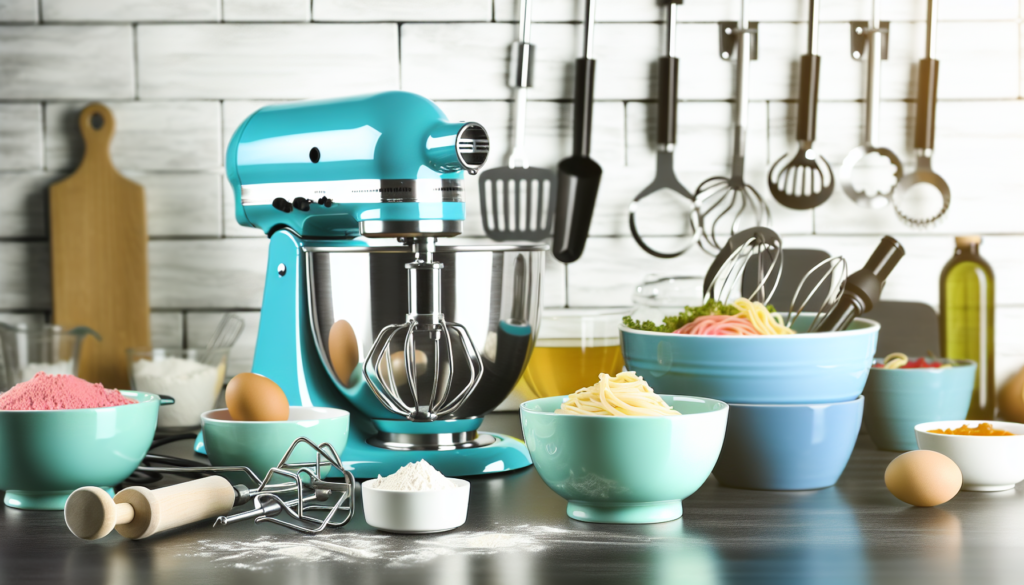
Stand mixers are more than just a staple in modern kitchens—they are a revolution in food preparation. From automating mixing and whisking to enabling diverse culinary techniques, they are indispensable. This article will dive deep into the world of stand mixers, with a special focus on KitchenAid and its versatile attachments, empowering both home cooks and professionals to elevate their culinary game.
The Evolution and Impact of Stand Mixers
The story of the stand mixer intertwines with the evolution of modern baking and culinary practices, reflecting both technological ingenuity and a response to changing lifestyles. The stand mixer’s roots can be traced to inventions in the 19th and early 20th centuries, beginning with the hand-powered egg beater patented by Ralph Collier in 1856. However, the true breakthrough came in 1919, when Herbert Johnston, an engineer at Hobart Manufacturing, revolutionized food preparation with the introduction of the first KitchenAid stand mixer. Johnston’s vision was inspired by the tedious chore of kneading dough in commercial bakeries, and his early models quickly found their way from industrial kitchens into homes, forever altering domestic food preparation.
The advent of the stand mixer was a watershed moment in both home and professional kitchens. Before its arrival, many labor-intensive baking and cooking tasks demanded significant manual effort, often limiting creativity and production capacity. The automation provided by stand mixers not only accelerated repetitive processes like mixing, whipping, and kneading but also improved the consistency of results. This reliability enabled home cooks and professional chefs alike to expand their repertoires and delve into new recipes with confidence, knowing their stand mixer could handle complex or lengthy tasks with ease.
Differences in mixer types—such as the planetary (where the beater orbits around a stationary bowl, seen in KitchenAid mixers) and spiral (common in large-scale commercial settings, where both bowl and hook rotate)—have allowed for optimization of performance based on context. Planetary mixers offer versatility for varied tasks and are ideal for the home cook, while spiral mixers excel at heavy dough work found in bakeries. KitchenAid’s innovations, including a vast array of specialized attachments, have cemented the stand mixer as a multitasking kitchen powerhouse, encouraging experimentation and enabling the modern, efficient kitchen.
Inside the Stand Mixer How It Works and Core Attachments
The stand mixer’s effectiveness lies in its innovative mechanical engineering, marrying a powerful motor with a sophisticated gear-driven mechanism. At its core, most home stand mixers—especially those from iconic brands like KitchenAid—utilize a planetary mixing action. This system means the attachment (such as a whisk or dough hook) rotates on its own axis while orbiting around the stationary bowl, ensuring consistent incorporation of ingredients from every angle. The robust gearbox within the mixer head not only delivers torque for heavy doughs but also reduces vibration, leading to smoother operation and less countertop movement.
Central to the function of any stand mixer is the mounting system that securely attaches both the bowl and the various mixing tools. KitchenAid mixers typically employ a bowl-locking mechanism, either a bowl-lift or tilt-head design, which keeps the bowl stable during rigorous mixing tasks. This stability provides the basis for hands-free operation—a defining benefit of stand mixers. Variable speed controls, offering a range from gentle stirring to high-speed whipping, give users precision, making it possible to tackle everything from folding batters to aerating egg whites.
Three primary attachments are included to maximize versatility. The *wire whisk* rapidly incorporates air into liquids, creating lofty whipped creams and aerated egg whites. The *flat beater* is the workhorse for normal-to-heavy mixtures, efficiently blending batters, creaming butter and sugar, or mixing cookie dough. The *dough hook* excels at kneading yeast doughs, saving both time and effort while ensuring even gluten development. Over the years, KitchenAid’s design consistency has ensured that these attachments are universally compatible across most mixer models, allowing for upgrades or replacements as needed and affirming the brand as a long-term kitchen companion.
The Rise of KitchenAid The Iconic Mixer Brand
KitchenAid’s journey from humble industrial roots to an indisputable kitchen icon is a testament to both innovation and an unyielding commitment to quality. Born under the umbrella of the Hobart Manufacturing Company in 1919, KitchenAid originally aimed to revolutionize commercial food preparation. The very first stand mixers were engineered for bakeries and restaurants, but it wasn’t long before the concept was scaled down for home cooks—culminating in the legendary Model ‘K’ of 1937, designed by Egmont Arens.
This model established the silhouette that remains virtually unchanged—a curving, streamlined form, sturdy all-metal construction, and a planetary mixing action. The design was not only functional but also timelessly elegant, featuring a tilt-head or bowl-lift mechanism and an instantly recognizable profile. These signature design features, introduced in the 1930s, set KitchenAid mixers apart not just as appliances, but also as statements of taste and craftsmanship on the kitchen counter.
What truly elevated KitchenAid, however, was the mixer’s unmatched durability and versatility. Users came to trust that their KitchenAid stand mixer would withstand decades of regular use, handling everything from thick bread dough to delicate cake batters, always delivering consistent results. The appeal extended through generations, with many families passing down their beloved mixers.
Further cementing KitchenAid’s legendary status was the ingenious universal attachment hub introduced with the model ‘K’. This hub, still a feature today, allows mixers from any era to pair seamlessly with a wide array of attachments—whether brand-new or vintage—ensuring that cooks can tap into evolving culinary trends and technologies without replacing their core appliance. This enduring compatibility, unmatched in the world of kitchen equipment, is a cornerstone of KitchenAid’s continued popularity, making it a timeless investment for home and professional cooks alike.
Expanding Functionality With KitchenAid Attachments
With the foundational stand mixer on the countertop, the true magic of KitchenAid and other premium mixers reveals itself through their wide selection of specialized attachments. While mixers commonly arrive with a flat beater, wire whisk, and dough hook, the real expansion begins the moment you explore beyond this standard set. Thanks to the iconic universal power hub, KitchenAid stand mixers unlock diverse culinary pathways with an impressive suite of add-on tools.
Pasta lovers can experience the satisfaction of rolling and cutting fresh noodles with KitchenAid’s pasta roller and cutter set—transforming a mixer into a bona fide pasta machine. For home chefs who love charcuterie or fresh burgers, the food grinder attachment effortlessly processes meats, cheeses, or vegetables, opening doors to homemade sausages, meatballs, and dips. Gardeners and health-conscious cooks can spiralize zucchini or sweet potatoes into vibrant, nutrient-rich noodles using the spiralizer attachment, or squeeze every drop from citrus and leafy greens with dedicated juicer and sauce attachments.
On sweltering summer days, the ice cream maker attachment turns the stand mixer into a frozen dessert station for families and guests, providing control over ingredients and endless creativity with flavor combinations. Bakers expand into homemade bread using grain mill attachments, while the sifter and scale innovates ingredient prep for precise results.
These attachments eliminate the need for a bulky specialized appliance for each task, streamlining kitchen storage while inviting experimentation. From prepping weeknight vegetables, grinding spices and grains for breakfast, to churning a custom frozen treat for dessert, a KitchenAid stand mixer equipped with the right attachments can effortlessly handle an inspiring range of daily cooking tasks. Integrating attachments into everyday routines transforms the mixer from a baking specialist into the versatile center of modern kitchen creativity.
Choosing and Caring for Your Stand Mixer and Its Attachments
Selecting the ideal stand mixer, especially within the KitchenAid range, means assessing your specific culinary demands and how they might evolve. Start by considering bowl capacity. For everyday tasks and smaller households, a 3.5- to 4.5-quart bowl is typically sufficient, handling batters, cookie dough, and single-loaf bread recipes with ease. However, if you anticipate baking in larger quantities or preparing meals for gatherings, an upgrade to a 5- or even 7-quart bowl affords greater flexibility and efficiency, accommodating larger doughs, double batches, or denser mixtures.
Motor power is crucial for reliability and versatility. If you frequently knead bread or stiff doughs, a higher wattage model with greater torque is worth the investment. KitchenAid’s range spans from modest motors apt for light whisking and mixing, to more robust stand mixers engineered for heavy-duty tasks. Attachment compatibility is equally vital—ensure your chosen model offers a multipurpose power hub capable of connecting to the full roster of KitchenAid stand mixer attachments, maximizing versatility without the clutter of single-purpose machines.
To safeguard your investment, establish a regular care routine. Wash bowls and attachments promptly after use, ideally with warm, soapy water unless labeled dishwasher safe. Metal and coated implements should be dried thoroughly to prevent rust or chipping. While some attachments tolerate the dishwasher, hand-washing prolongs their finish and function. Store attachments in a dedicated container or drawer to prevent misplacement and scratching.
Periodically inspect the mixer’s attachment hub and bowl-locking mechanisms for residue buildup and wear. Lubricate moving parts if recommended by the manufacturer. Check attachment fittings for signs of stress or cracking, especially for frequently used tools. This diligence ensures both mixer and accessories operate safely and efficiently for years, making upgrades or replacements a thoughtful, informed decision when expanding your kitchen’s capabilities.
Conclusions
Stand mixers, particularly KitchenAid models, have transformed both amateur and professional cooking. Their core design, robust performance, and versatile array of attachments turn a basic appliance into a culinary powerhouse. By understanding their evolution, selecting the right model, and caring for attachments, you can fully harness the stand mixer’s potential, revolutionizing your culinary creations for years to come.
Check Mykitchenreview blog section for more similar kitchen reviews.